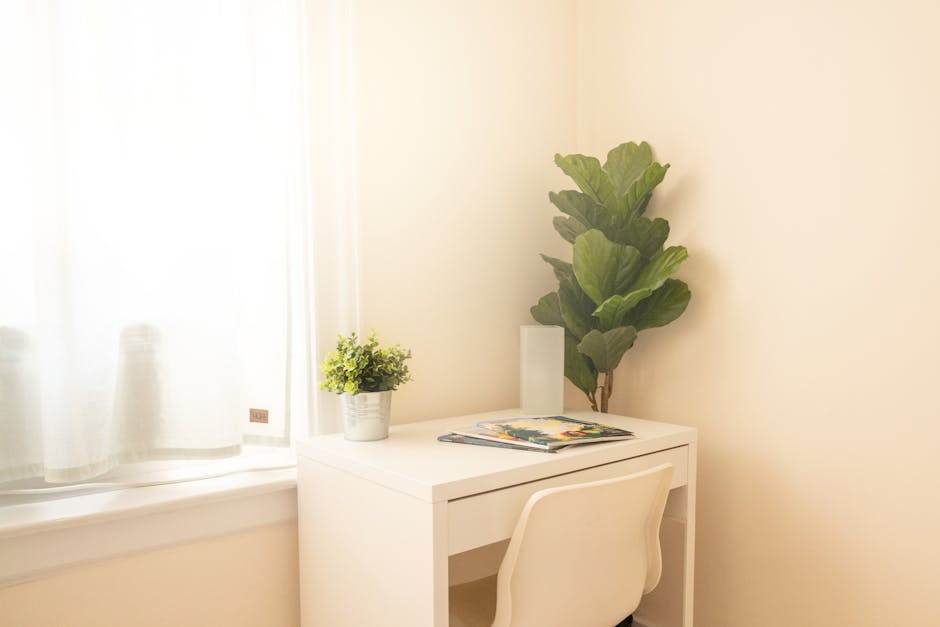
Small Space Desk Ideas for Apartments and Tiny Rooms
Setup Your Desk Editorial
Updated November 1, 2026
Quick Answer
In a small space, choose a desk that matches the footprint you can spare: a compact 40 to 48 inch desk, a corner or wall-mounted fold-down desk, or a slim console. Then use vertical storage, a monitor arm, and one-cable connections so the setup can disappear when you finish work.
Make a productive workspace in a tiny apartment with wall-mounted, fold-down and corner desk ideas, plus tips for storage and shared rooms.
Measure what you really have
Before choosing a desk, measure the space you can actually spare, including the chair. Many small-room desks fail because the chair has nowhere to go. You need roughly 30 to 36 inches behind the desk to slide the chair in and out comfortably.
Also note windows, radiators, outlets, and doors. A desk in front of a window gives you natural light, but you will need to manage glare, and an outlet too far away adds trailing cables.
Compact desk styles that work
The right style depends on your room. A narrow desk fits along a wall, a corner desk makes use of dead space, and a fold-down desk disappears when closed. A slim console table can double as a desk and as a hallway shelf.
Choose depth carefully. For a laptop, 20 inches is workable. If you plan to use an external monitor, 24 to 30 inches is more comfortable because you need viewing distance.
- ✓Wall-mounted fold-down desk for the tightest rooms
- ✓Corner desk to use dead space
- ✓Narrow wall desk, around 36 to 48 inches wide
- ✓Console table that doubles as a hallway piece
- ✓Small standing desk that lets you work in less floor space
Go vertical
When the floor is limited, use the wall. Shelves above the desk hold books and supplies, a pegboard keeps tools in reach, and a monitor arm lifts the screen off the surface.
Keep the surface itself clear. A clear desk looks larger and calmer, and it makes a small room feel less cluttered. Store the things you use daily within arm's reach and everything else out of sight.
Use a monitor arm and a laptop stand
A monitor arm clears the area under the screen, so a keyboard can slide in when you are done, and you can swing the screen out of the way. A laptop stand does the same for a portable setup, lifting the screen to eye level and freeing space underneath.
Choose a small keyboard if desk width is tight, and a wireless mouse so you are not tangled in cables.
Look for multi-purpose pieces. A desk with a built-in shelf, a stool that tucks under, or a lamp with a charging port saves space and reduces the number of things you need to fit into the room.
Working in a shared room
If your desk lives in a bedroom or living room, create a boundary. A bookshelf or folding screen behind you separates work from rest. Facing away from the bed helps, and a lamp with a warm tone makes the area feel different from the rest of the room.
At the end of the day, shut the laptop, put equipment in a drawer or basket, and switch off the lamp. This helps your mind switch off too.
- ✓Use a screen or shelf as a divider
- ✓Face away from the bed if possible
- ✓Use a distinct lamp for work hours
- ✓Store gear out of sight at the end of the day
Small-space comfort
Compact does not need to mean uncomfortable. Choose a chair that fits under the desk and supports your back, add a footrest if your feet do not reach the floor, and keep the screen at eye level.
If you can fit a small plant or a lamp, it adds personality without taking much room. Good lighting matters more in a small space, so make sure your work surface is well lit.
A good chair does not have to be bulky. Compact task chairs without arms slide fully under the desk, and a stool can serve as an extra seat when a guest visits.
A quick small-space checklist
Before you buy anything, run through the checklist below. It keeps you from buying a desk that looks right in a photo but fails in your room.
- ✓Measure width, depth, and chair clearance
- ✓Check outlet distance
- ✓Plan storage up the wall, not across the floor
- ✓Pick a desk depth that suits your screen
- ✓Plan how the setup hides when you are done
Ideas worth stealing for a tight room
Sometimes the answer is to rethink the space rather than fit a desk into it. A deep windowsill can become a desk if you add a board, and the top of a low bookshelf can hold a laptop for standing work.
A rolling cart is a flexible choice too. It can hold your laptop and supplies during the day and roll into a closet at night, which keeps the room feeling like a home instead of an office.
- ✓Windowsill desk with a board
- ✓Tall bookshelf with a fold-out shelf
- ✓Rolling cart as a mobile workstation
- ✓Closet office with a shelf and a lamp
- ✓Dining table with a storage box for gear
Your Questions Answered
What is the smallest practical desk size?
For a laptop and a notebook, about 36 to 40 inches wide and 20 to 24 inches deep works. For an external monitor, aim for at least 24 inches of depth.
Are wall-mounted desks sturdy?
They can be when properly anchored into studs or masonry. Check the weight rating and follow the manufacturer's installation instructions.
How do I work in the same room as my bed?
Face away from the bed if possible, use a folding screen or shelf as a visual divider, and put the workspace away at the end of the day.
Is a corner desk worth it?
Often yes, because it uses space that is otherwise wasted. Make sure you can reach both surfaces comfortably.
Can I use a dining table?
Yes. Use a laptop stand and compact keyboard, and store the equipment in a box or basket so the table can be reset.
Where to Buy
Advertisement
Sponsored: today's featured offer →Advertisement